Los Angeles Art Week, or The Fair Is the Excuse.
On a city that keeps outrunning its own reputation
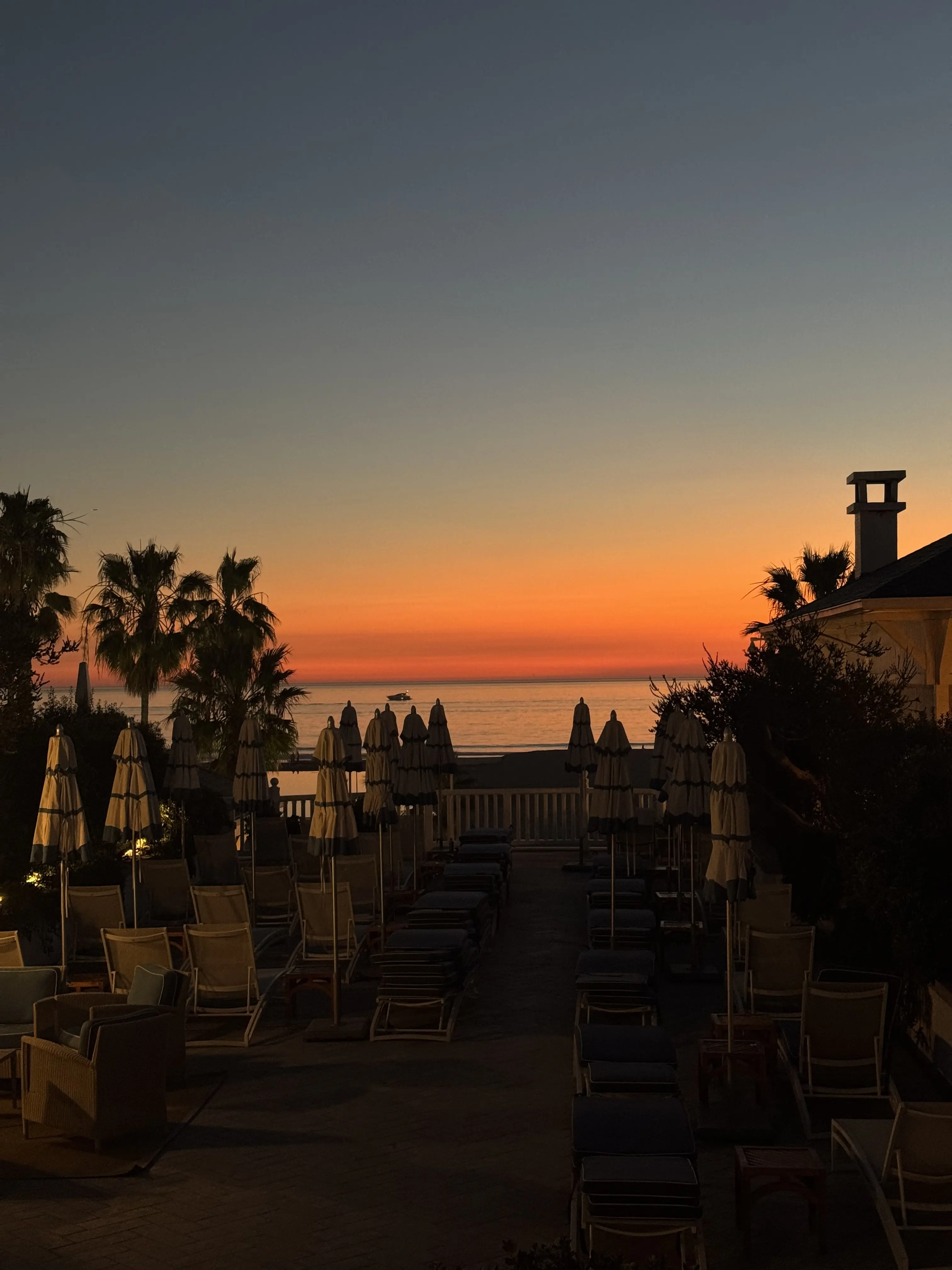
No one comes to Los Angeles for the art week. They come for the light. The art week just happens to be the reason they finally booked the flight.
This is not an insult. It is the operating logic of a city that has never needed a formal occasion to justify itself. Los Angeles doesn't build toward a unique cultural moment, it sustains a low hum of cultural seriousness year-round and simply turns up the volume in February. The art world arrives, slightly jet-lagged, highly caffeinated, and discovers, as it does every year, that the city was not waiting for it.
Frieze Los Angeles was good this year. More than good. The fair had colour, real colour, not the beige-on-white of a market hedging its bets. It was vibrant. The collectors on the floor looked like the city: varied, confident, allergic to reverence. Los Angeles money is not old enough to be discreet and not insecure enough to be loud. It simply buys what it finds interesting, which produces booths that reward looking. The fair opens at 10am, an hour earlier than its London or New York counterparts, keeping it in sync with its host city. Angelenos wake up early to the Pacific. They had already run the beach, showered, made the coffee, and arrived at the Santa Monica Airport unhurried at 10am. That image is more accurate a portrait of this city than anything a fair catalogue will tell you.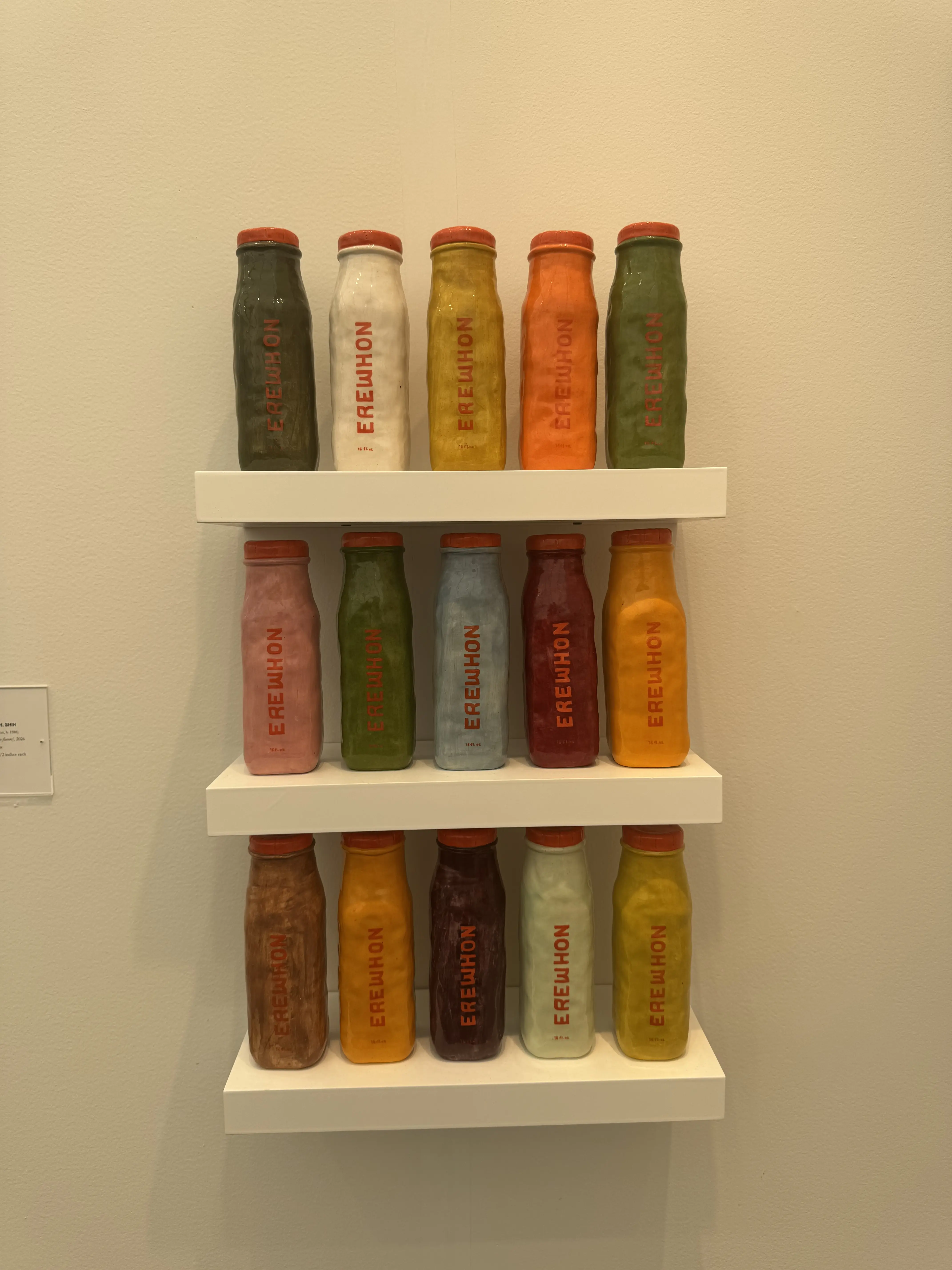
But Frieze, as ever, was the headline and not the story.
The real week happened in the margins, as it always does in a city this large and this constitutionally resistant to centralisation. MOCA was running an exhibition that asked something of you. And then there was the Los Angeles Philharmonic. Gustavo Dudamel's finale season at Walt Disney Concert Hall was not merely a programme of concerts. It was a city processing something it was not entirely prepared to process. To sit in that building during this particular week, surrounded by collectors who had spent the day negotiating prices is the specific texture of Los Angeles at its best.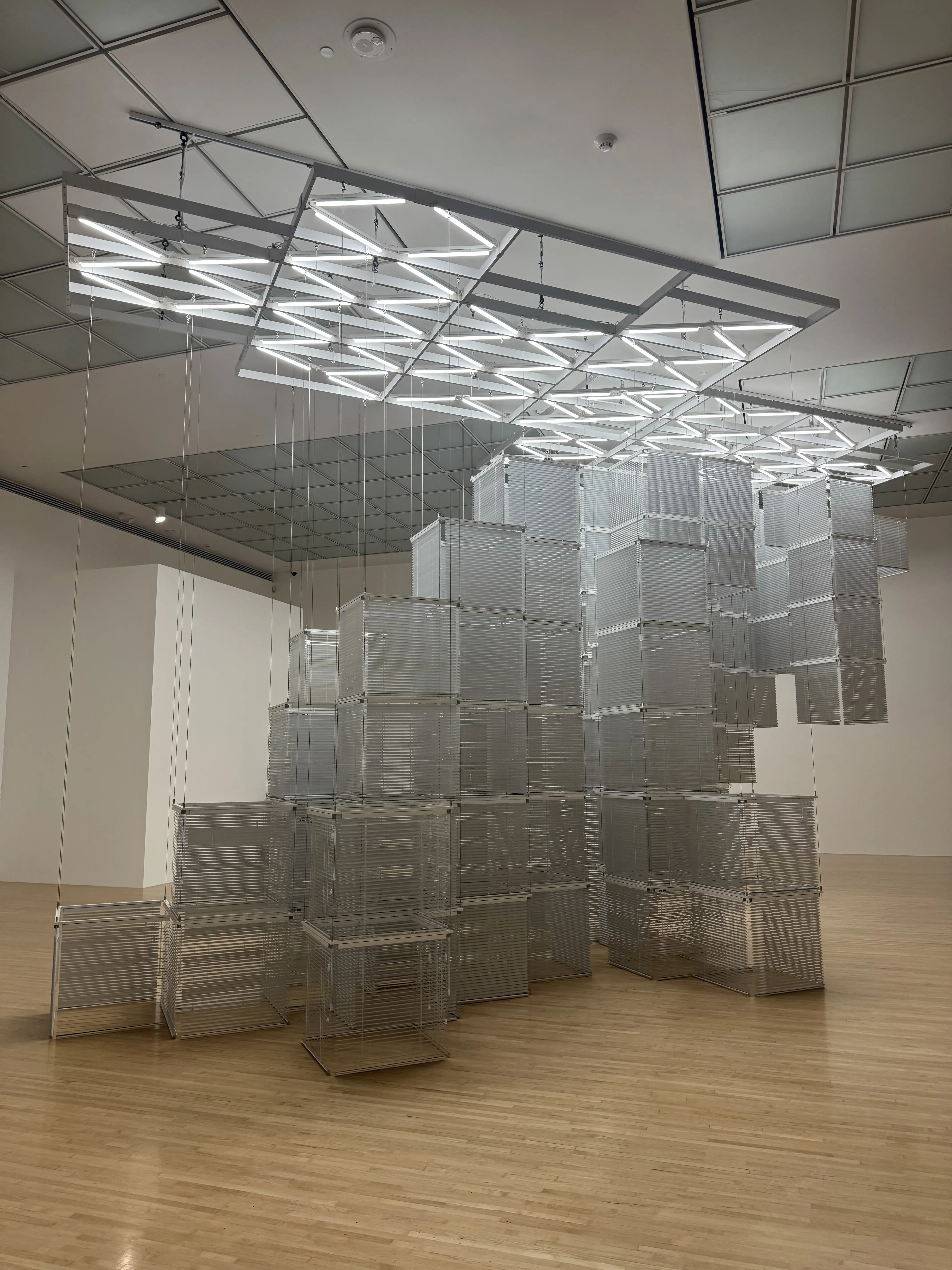
© Haegue Yang @MOCA
The smaller fairs delivered, in different registers.
Enzo Art Fair understood something essential: in a week when the main event charges accordingly, affordability is not a compromise position. It is a curatorial argument. The space was interesting, the work was priced for people who actually live with art rather than store it, and there was room, literal, physical room, to stand in front of something without performing enthusiasm at a gallerist.
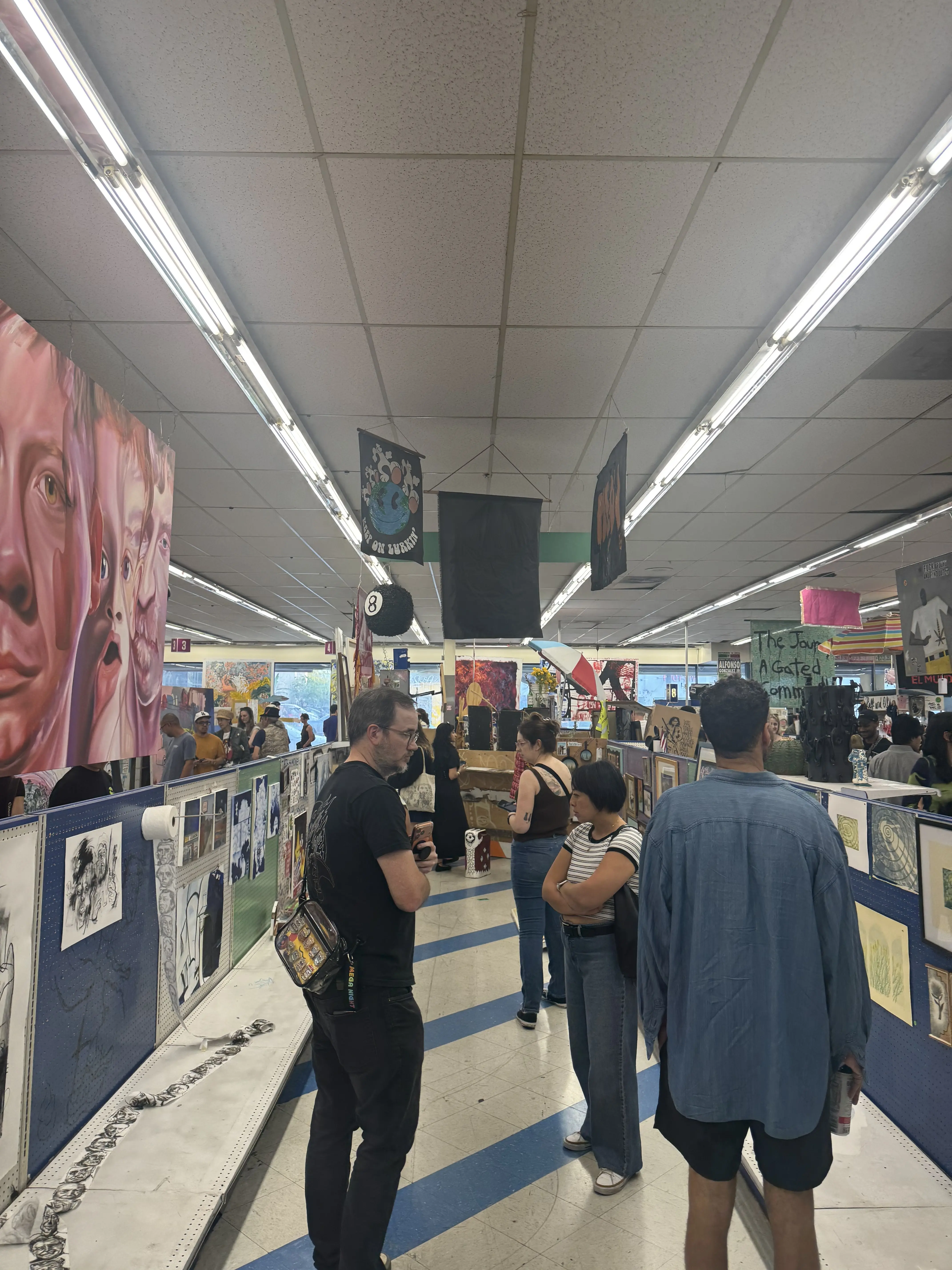
HypeArt was something else entirely. The move: transforming a 99 Cents Only store into a space that was simultaneously art fair, house party, retail experience, and political conversation, could only have happened in Los Angeles, and could only have meant what it meant in Los Angeles. The 99 cents store is not an abstract symbol here. It is infrastructure. It is where many Angelinos shop, one block from neighbourhoods that have been priced into abstraction. This is the strong argument being made without a single wall text. The art world tends to talk about access. HypeArt was free, everyone was welcomed, and it was sensational: you had to be there, in that body, in that space, for it to land.
Los Angeles will not be reduced to its marquee fair. The city is too sprawling, too contradictory, too genuinely serious about too many things at once to be summarised by a single tent at an airport. Frieze is the reason the flights get booked. But the MOCA, the LACMA, the Getty, among others, are the reason some people come back.