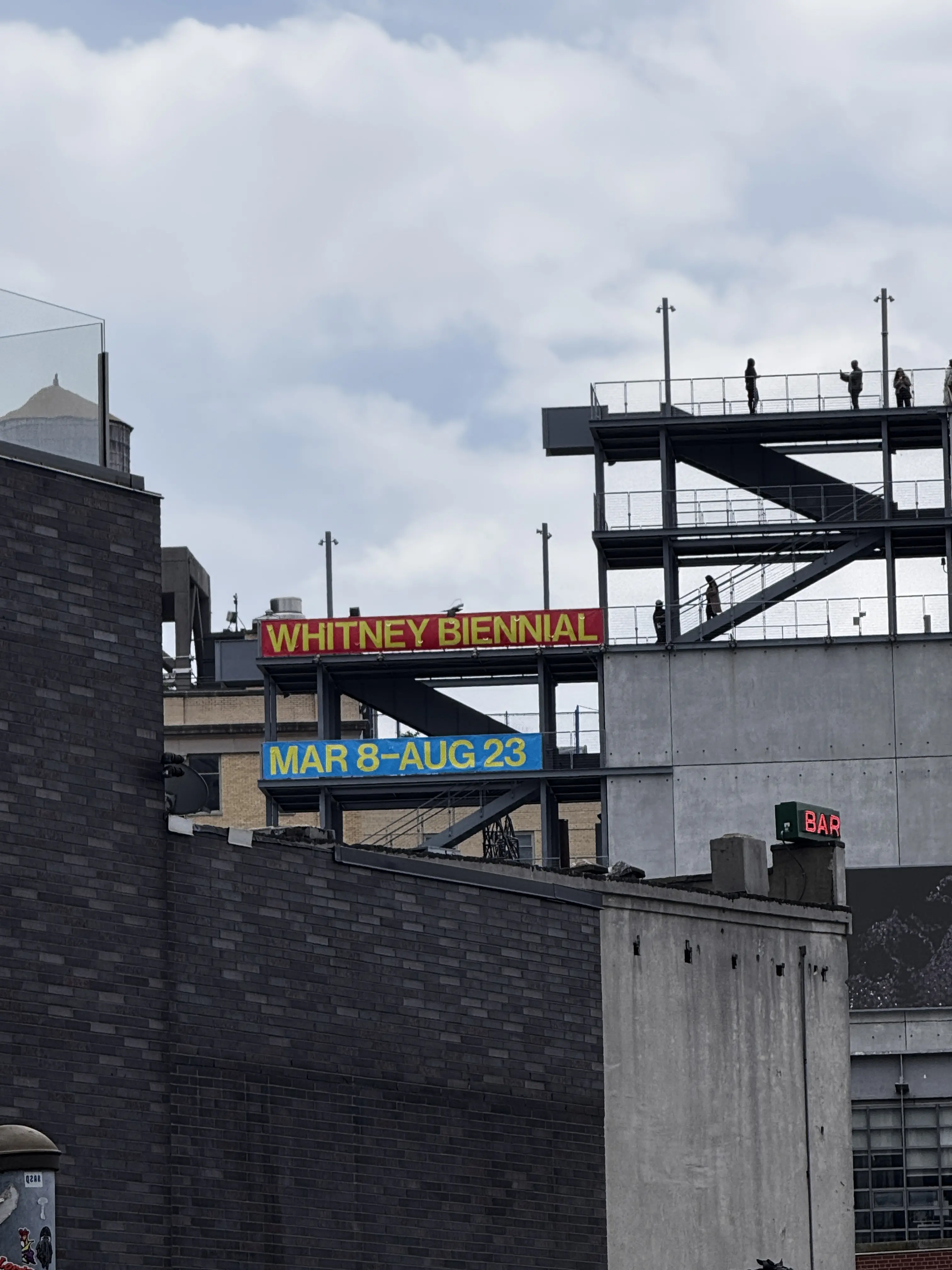
The City Behind the Screen.
The 82nd Whitney Biennial, Focus on Ignacio Gatica's Sanhattan
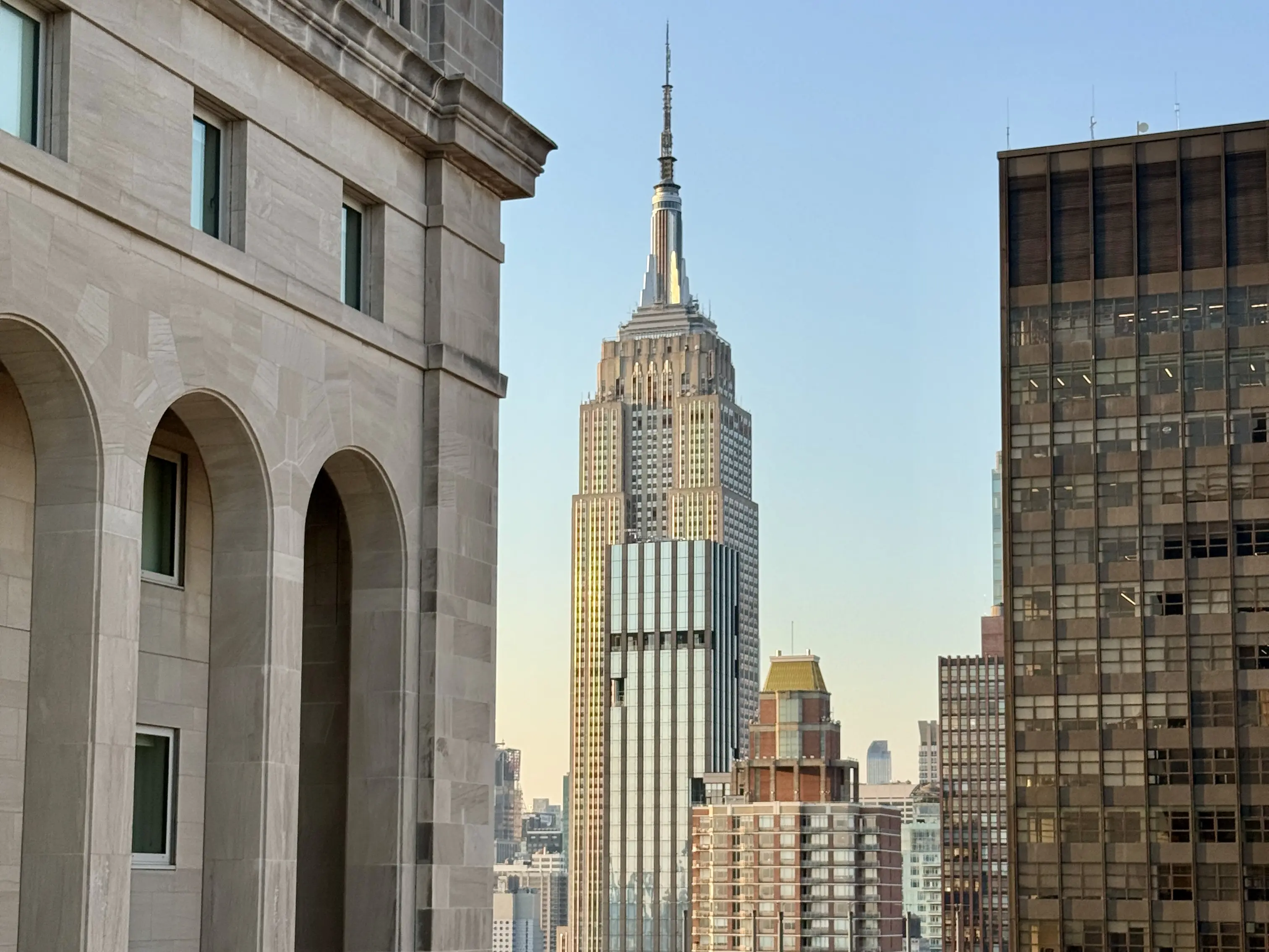
In a separate room from the rest of the Biennial sits my favorite piece of the show. A video screen stands near a large window. The window looks out onto Manhattan. The screen shows a city that is almost Manhattan. Two LED panels, one on each side of the screen, display coordinates. On one side, the latitude and longitude of Manhattan. On the other, the latitude and longitude of Sanhattan, the financial district of Santiago, Chile. Behind the screen, the actual skyline is right there, through the glass, behind the rendered one.
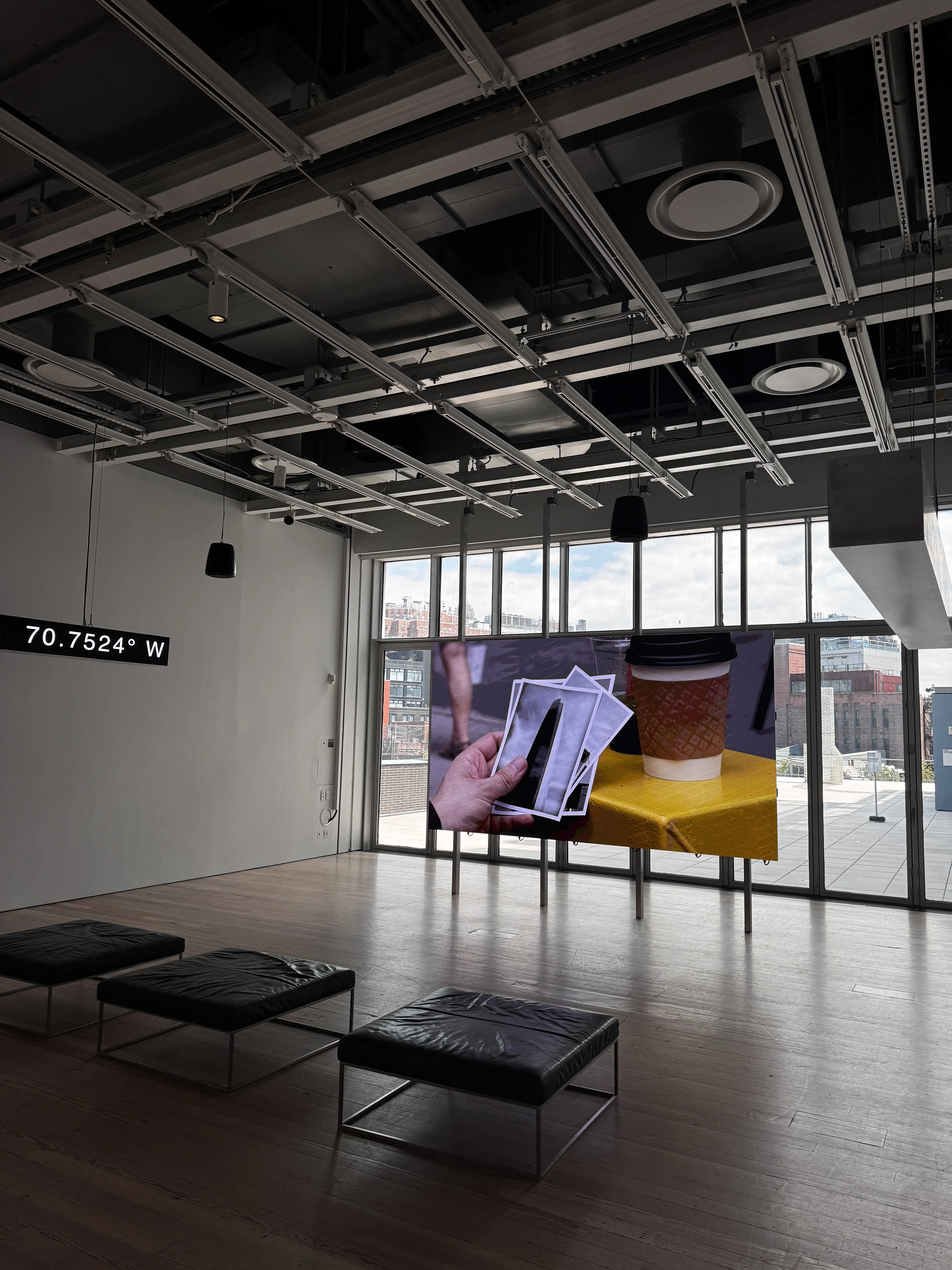
The work is Sanhattan, by Ignacio Gatica, born in Santiago in 1988 and now based between New York and Santiago. The wall text supplies the history plainly. Sanhattan was built in the 1990s, after the end of the Pinochet dictatorship, the seventeen-year regime installed by a US-backed coup in 1973. The district was designed to resemble Manhattan on purpose. It was meant as architecture in praise of free-market ideology, the ideology promoted in Chile during the dictatorship. Gatica's video weaves cityscapes with dreamlike narration and interviews, building a portrait of a place that is both a copy and a thesis. The framed coordinates on either side of the screen place two cities side by side as data, erasing the hierarchy that the names imply. Neither is the original. Neither is the copy.
We are watching this in a museum on the West Side of Manhattan, in the country whose university produced the economists who advised the dictatorship. The Chicago Boys were Chilean economists, trained at the University of Chicago through a US-backed exchange program. After the 1973 coup they advised the regime before running its economy, holding the finance ministry and the central bank. The free-market model they installed is still taught as a case study in business schools around the world.
Privatized infrastructure. Pension systems converted to private accounts. Public services restructured as markets. Many policy debates now alive in the United States were tested in Chile forty years ago, and are still politically contested there. Sanhattan was the laboratory. It seems that Manhattan, behind the glass, is catching up.
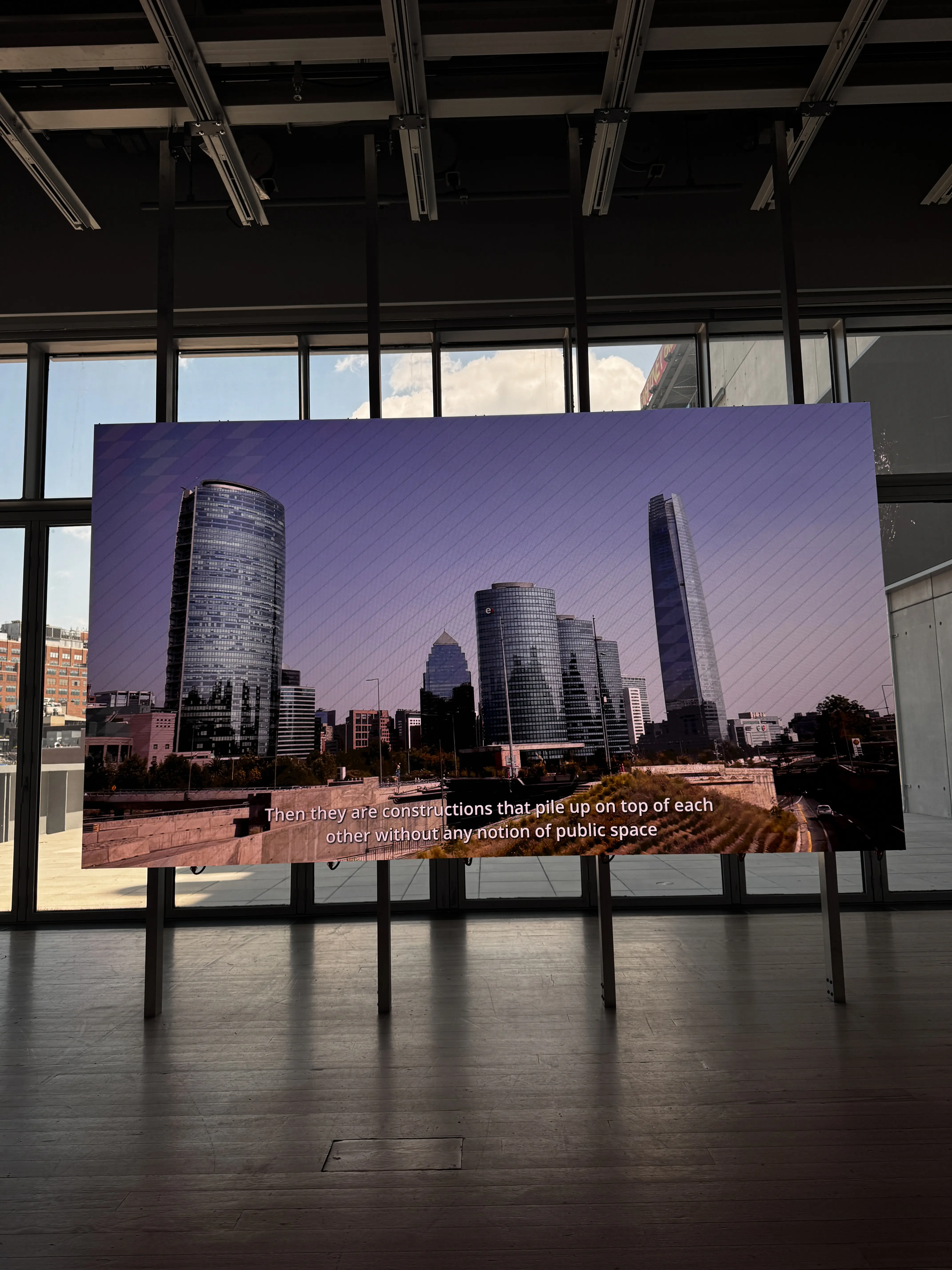
The Chicago Boys retired. The case study did not. Sanhattan is the most useful piece in the Biennial because it refuses to call any of this foreign. Gatica’s work is strong on its own, but the Whitney’s placement gives it its charge. To put Sanhattan in Manhattan, in that room, beside that window, at this political moment, is not incidental. It is a curatorial decision with nerve and restraint. Nothing is overexplained. The room simply lets the two cities face each other.
In Santiago, the free-market program arrived through dictatorship. Here, its echoes arrive more quietly: through elections, policy, and public acquiescence.